How Fire Departments Can Prepare Firefighters for Technical Rescue Missions

How Fire Departments Can Prepare Firefighters for Technical Rescue Missions

Estimated reading time: 5 minutes

Technical rescue training is key for any size or type of fire department. Fire and rescue services respond to an emergency call on a whim, and many times without knowing what waits to meet them. The basics of search and rescue missions should be part of the core competencies of firefighters.

What Is Technical Rescue

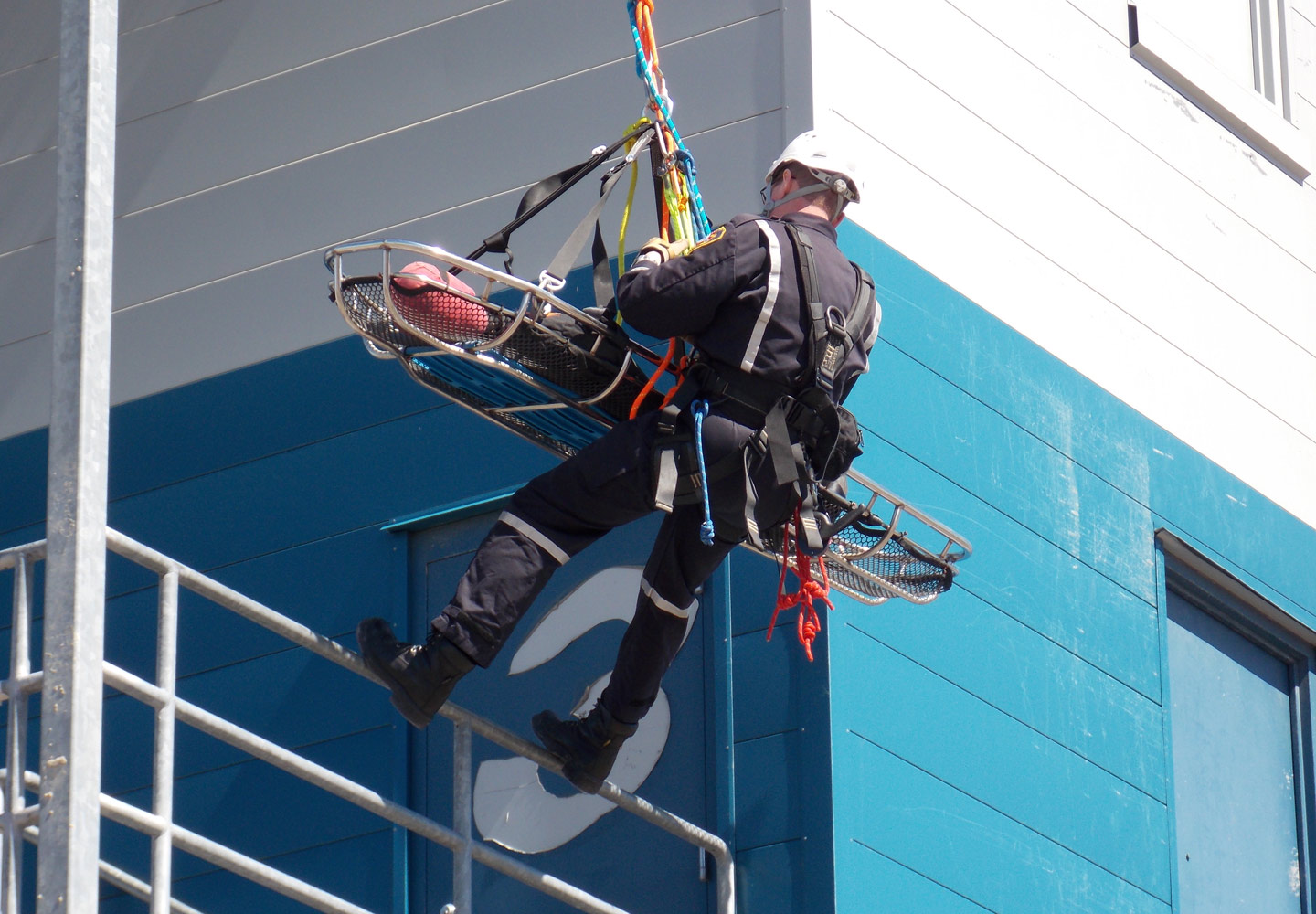
Technical rescue is considered a specialized requirement in response to fire and rescue services. It encompasses six main disciplines of rope rescue, confined space rescue, vehicle/machinery rescue, structural collapse rescue, trench rescue, and water rescue.

What Are Other Technical Rescue Disciplines?

  • Tower Rescue
  • Animal Technical Rescue
  • Wilderness Search and Rescue
  • Cave Rescue
  • Mine and Tunnel Rescue
  • Helicopter Rescue
  • Surface Water Rescue
  • Swiftwater Rescue
  • Dive Rescue
  • Ice Rescue
  • Surf Rescue
  • Watercraft Rescue
  • Floodwater Rescue

Why Is Technical Rescue Training Important for Search and Rescue Operations?

For a successful technical rescue, certified members must undergo extensive training in the six main disciplines. Each discipline supports the basic rescue operations of the others. Whether a team member is a volunteer, part-time, or full-time firefighter, search and rescue operations can be required during any type of emergency. A structure fire, vehicle accident, or an industrial incident can quickly require specific search and rescue skills as well as the use of suitable equipment.

What Is the NFPA Standard for Technical Rescue Personnel Professional Qualifications?

Qualifications of NFPA 1006 certification for a Technical Rescue Personnel position are obtained with training in the awareness, operational, and technician levels of the course. It focuses on rescue missions on land, water, and air.

Is NFPA 1006 Certification Necessary to Become a Rescue Technician?

The comprehensive NFPA 1006 certification is standard for all search and rescue technicians. Firefighters, emergency medical responders, and law enforcement are considered key candidates to obtain the NFPA 1006 certification in technical rescue operations.

Technical Rescue Training Challenges Faced by Fire Services

A technical rescue certification does not come without challenges. There are three main aspects of the training that can limit access to anyone in the search and rescue fields.

Not Having Experienced Instructors

As a technical rescue certification is obtained to enhance the safety, performance, and ability of a person in the emergency response field, access to experienced instructors is limited. The people with the training and expertise use their knowledge and skills in their own held positions. An instructor in technical rescue courses needs to have extensive experience and training time to provide proper teachings.

Not Having the Required Resources

Classroom and book instruction is just a small part of certification towards Technical Rescue Operations. It is imperative to have the proper resources such as the environment(s), equipment, and PPE for learning. Training for a water rescue cannot be done in a facility’s gymnasium, for example.

Not Having the Budget/Funding

One of the biggest challenges with offering Technical Rescue Operations courses to team members is lack of funding. Unlike major corporations in the industry of hazardous activities, fire departments may not have the budget to set up an adequate course that meets the NFPA 1006 standards.

How Can FESTI Help to Overcome Technical Rescue Training Challenges?

Those in the fire and rescue service do have the opportunity to obtain the highest levels of training and certification for Technical Rescue Operations at the Fire and Emergency Services Training Institute (FESTI). Our world-class facilities are located within the fire service of Canada’s largest airport at Toronto Pearson International Airport.

All of our team members and teaching staff are experts in firefighting, emergency services, occupational health and safety, and airport emergency preparedness situations. We have the appropriate training grounds and provide advanced equipment and PPE for all training conditions.

FESTI’s Certified Training Programs for Rescue Technician Professionals

NFPA 1006 Technical Rescuer

To become a Technical Rescue Technician, our NFPA 1006 program covers all core competencies needed for certification. With demonstrations, hands-on training, and evaluations, candidates learn Incident Command System, Managing Resources, Incident Surveys, Scene Surveys and Searches, Helicopter Support Operations, Scene Safety, Single points anchors, Site Operations, Incident Size up, Hazards Control, Victim Management, Equipment Maintenance, Rescue Knots and Rigging, and Belay and Haul systems.

NFPA 1006 Confined Space Rescue Training

Learning to rescue from confined spaces is not for the faint of heart! Under the NFPA 1006 curriculum, candidates learn through instruction and practical training to recognize hazard and access, stabilize and package victims, and remove victims using the proper equipment and procedures.

NFPA 1006 Trench Rescue Operations

Using the taught knowledge and available tools, candidates are exposed to hands-on training of the NFPA 1006 Trench Rescue Operations course. By understanding safety measures behind rescuing a person from a trench less than eight feet in depth, candidates will have a better chance for a successful trench rescue.

NFPA 1006 Trench Rescue Technician

The NFPA 1006 Trench Rescue Technician course takes the operations course to the next level with hazardous scenarios.

NFPA 1006 Machine Rescue Training

To be prepared for a machinery rescue, the NFPA 1006 Machine Rescue training program focuses on equipment use for extrication emergencies. Hand and power tools are used in various rescue operations. 

Aircraft Rescue Training

There is no better place than Canada’s largest airport to learn and obtain certification in aircraft rescue training. Instructed with real-life scenarios, the content taught is practiced with Aircraft Rescue Firefighter Training (ARFF) equipment and personnel.

At FESTI, we offer certifications for all firefighters, emergency medical responders, police service members, and corporate leadership members. Register for a course or program by clicking here and complete the webpage registration. Or for more information about FESTI, contact us today.


Why Firefighters Need Emergency Medical Responder (EMR) Training

Why Firefighters Need Emergency Medical Responder (EMR) Training

Estimated reading time: 5 minutes

Emergency Medical Responder training courses are used by first responders across the country. Those with this type of specialized medical training are properly equipped and educationally prepared for all emergency situations.

All first responders are trained with basic medical skills including, but not limited to, administering first aid and CPR. First responders can be firefighters, police officers, correctional officers, parole officers, and probation officers as put forth by Canadian emergency services.

An Emergency Medical Responder has all of these basic medical skills with advanced training in life-saving measures, monitoring one’s condition, making critical medical decisions, and transporting a patient to a healthcare facility.

Why Is Emergency Medical Training for Firefighters Important?

As a firefighter, you are expected to control and extinguish fires, educate the public on fire safety, and offer basic medical help. But what do you do when a fire call turns into a medical emergency with life-threatening situations? Having the extensive knowledge and training to respond to any form of an emergency call could make all the difference.

A medical emergency can happen in an instant. As firefighters are generally one of the first to arrive on a scene of an accident or structure fire, the ability to administer emergency medical assistance could mean the difference between life and death.

Firefighters respond to hazardous situations every day, which also puts their own life at risk. Having the training and mindset to help each other if the need arises would be beneficial to firefighters, emergency medical responders, and the general public.

Is EMT Training Necessary to Become a Firefighter?

For most firefighter positions, EMT training is not mandatory. Firefighters are required to have valid First-Aid and CPR training certification regardless of their position. That being said, there are specialized firefighter positions within fire departments, companies, institutions, and government agencies that do require a firefighter to also have EMT training as a firefighter paramedic.

Responsibilities of Firefighters as a First Medical Responder

A firefighter with training and certification as a first medical responder can administer first-aid and control the medical emergency to stabilize victims. Other responsibilities include, but are not limited to:

  • Assess patient conditions
  • Perform CPR
  • Give oxygen
  • Bandage wounds
  • Assist with childbirth
  • Gather medical histories
  • Load patients into ambulances
  • Clean up any blood or other fluids

How FESTI Can Help Firefighters with Emergency Medical Training 

The Fire and Emergency Services Training Institute (FESTI) is one of the leading training facilities for firefighters and emergency personnel. With its headquarters at the country’s largest international airport—Toronto Pearson—FESTI has state-of-the-art equipment, training grounds, and world-class instructors who themselves have worked on the front line of fighting fires.

Candidates have a selection of emergency medical training courses to choose from to accommodate the needs of their current and future positions within the firefighting field.

Standard First Aid, CPR Level “C” and AED (Red Cross)

The Standard First Aid, CPR Level “C” and AED course lays the groundwork and training for basic medical skills to respond to any emergency situation. Participants study response preparedness, EMS system, airway emergencies, wound care, injuries, poisons, and environmental emergencies.

Emergency Medical Responder

FETSI offers an Emergency Medical Responder course that provides three-year certification. With basic medical training as a prerequisite, participants study patient assessments, interventions, and transportation of a patient. All course material and training adhere to the requirements of the National Occupational Competency Profiles (NOCP) as defined by the Paramedic Association of Canada.

Tactical Emergency Casualty Care (TECC)

For advanced and specialized emergency medical training, FESTI offers Tactical Emergency Casualty Care certification. Based on the guidelines of Tactical Combat Casualty Care (TCCC) program and Committee on Tactical Emergency Casualty Care (Co-TECC), it uses military lessons. Participants will learn hemorrhage control, surgical airway control, and strategies for treating wounded responders in threatening environments.

Emergency Medical Responder Certificate Renewal

For those requiring a recertification of the Emergency Medical Responder course, FESTI offers EMR course for the EMR certification. With updated policies and procedures as set forth by the Paramedic Association of Canada National Occupational Competency Profile, participants will be trained in responding, hands-on care, injuries, environmental emergencies, and multiple casualty situations.

Contact FESTI to Learn More About Our EMR Training Courses

Interested in advancing your firefighting training to emergency response? FESTI offers certification training with the highest standards with the EMR course in Toronto. Eligible candidates will be learning and working within an active fire department as FESTI is part of the airport team of Toronto Pearson.

All of our programs, training courses, and learning classes meet the National Fire Protection Association (NFPA) procedural guidelines and polices. As such, our institute is constantly updating and advancing all levels of education and training.

While EMR certification is not necessarily a requirement to be a recruit for fire fighting, more and more departments are making this certification required for job postings. To be competitive, be sure to review all required certifications and make sure you are ready for your application.

Starting today with EMR certification will be a good way to make sure you are ready! Contact us to register for our Emergency Medical Responder course and other related firefighting programs.


How to Reduce Firefighter Line of Duty Deaths and Accidents

How to Reduce Firefighter Line of Duty Deaths and Accidents

Estimated reading time: 5 minutes

Firefighter accidents unfortunately are part of the risk of becoming a firefighter. The National Fire Protection Association (NFPA) standards are followed in Canada under the Office of the Fire Marshall in Ontario. Their findings of firefighter fatalities over the past few decades show that while the equipment and protection measures have improved, the number of deaths and injuries have remained the same.

Recent Firefighter Accidents and Deaths

In Canada, there have been reported firefighter accidents and deaths in every province and territory. Recent incidents involve a Manitoba Wildfire Service member succumbing to his injuries of a live fire and an Alberta volunteer firefighter killed in a vehicle accident while responding to an active blaze.

During the Atlantic Fire Leadership Conference held in the summer 2022, special guest speaker Dr. Robert Krause, a battalion chief from Ohio, presented the findings of his study of 176 line of duty deaths (LODD). His research highlighted that the top reasons of LODD were sub-optimal personnel readiness and inadequate preparation. He stated that the most important lesson is to have overall training for all firefighter personnel.

NFPA Study on Firefighter Deaths by Cause of Injury

The National Fire Protection Association routinely releases information and studies on fire statistics, injuries, and fatalities within the industry. The organization is dedicated to providing updates on fire protection systems, causes of major fires, and other fire-related topics.

The latest NFPA updated study results were released in July 2022. It included data on recent firefighter deaths as a result of injury while on active duty.

Cause of Injury

Fatalities

Percentage

Overexertion/Stress/Medical

26

54%

Rapid fire progress/explosions

6

13%

Crashes

4

8%

Struck by Vehicle

4

8%

Fell

3

6%

Structural Collapse

1

2%

Exposure to Electricity

1

2%

Lost Inside

1

2%

Exposure to Heat

1

2%

Ways to Prevent Firefighter Injuries and Fatalities

Firefighter training focuses on preventing injuries and fatalities by teaching the skills and techniques needed for safety. Becoming a firefighter requires a sense of wanting to help people and putting one’s life on the line to help save others.

With the proper training, firefighters learn to respond to active fires and emergency situations with the knowledge and equipment to manage the safety of their fellow chapter members and the public at large.

Training Safety Officer Program

Courses for firefighters do not stop at the end of the class schedule. Firefighters at all levels require specialized ongoing training throughout their careers. While a training safety officer program focuses on the responsibilities of a fire department health and safety officer and/or an incident safety officer, it is necessary for all members to have the right tools.

In-house and on-site training programs are designed to assist career and volunteer firefighters to safeguard personnel safety while making decisions in the best interest of everyone involved.

Taking a Proactive Approach to Fitness

The physical aspect of becoming a firefighter is designed to protect the wellbeing of the firefighter while performing the tasks and duties of the job. Each fire department has its own fitness program/guidelines in accordance with its governing board. In addition to keeping firefighters safe, the physical fitness programs are adopted by departments to reduce the risk of injury and compensation claims.

Using the Right Protective Clothing

Having access and using proper protective clothing, gear, and equipment can reduce the risk of injury and possible death during the fighting of active fires. Firefighters require bunker gear which usually consists of a coat, pants, gloves, helmet, hood, boots, and equipment such as a self-contained breathing apparatus (SCBA). It is crucial that firefighters have the appropriate gear and safety equipment that resists heat stress without inhibiting mobility.

The Importance of Firefighter Training to Prevent On-Duty Injuries and Deaths

Firefighting programs offered at accredited schools and colleges have a responsibility to ensure each graduate has the proper training to prevent on-duty injury and death of themselves and in respect to others. Live fire training is one of the most needed approaches for any form of firefighter training. It is with this type of on-hands situation the firefighter learns to make critical decisions while performing safety measures to stop the dangerous fire.

How FESTI Can Help with Firefighter Training

The Fire and Emergency Services Training Institute (FESTI) offers some of the top accredited programs and firefighter courses in Ontario. We focus on courses, programs, and training certifications to new and current firefighters, emergency personnel, and corporate organizations.

Our NFPA courses are instructed by certified and experienced fire department officials at our main location at Toronto Pearson International Airport. As the country’s largest Aircraft Rescue and Firefighting (ARFF) training source, we are the solution for your search for a “firefighter academy near me”.

Need more reasons?

  • We are part of an active fire department with associated training facilities.
  • We have other college programs use our training facilities.
  • We offer new and updated courses, programs, and training facilities.
  • We employee experienced full-time training staff.
  • We are located in a prime location for training for firefighters and emergency personnel from across Canada and the world.
  • We can offer customized programs in accordance with the guidelines and recommendations of NFPA standards.

Register for a course or program by clicking here and complete the webpage registration. Or for more information about FESTI, contact us today.