Advanced Confined Space Rescue Training for Firefighters: What You Need to Know

Advanced Confined Space Rescue Training for Firefighters: What You Need to Know

Estimated reading time: 5 minutes

Confined space rescue training is a specialized skill to prepare firefighters and emergency personnel for hazardous and dangerous situations.

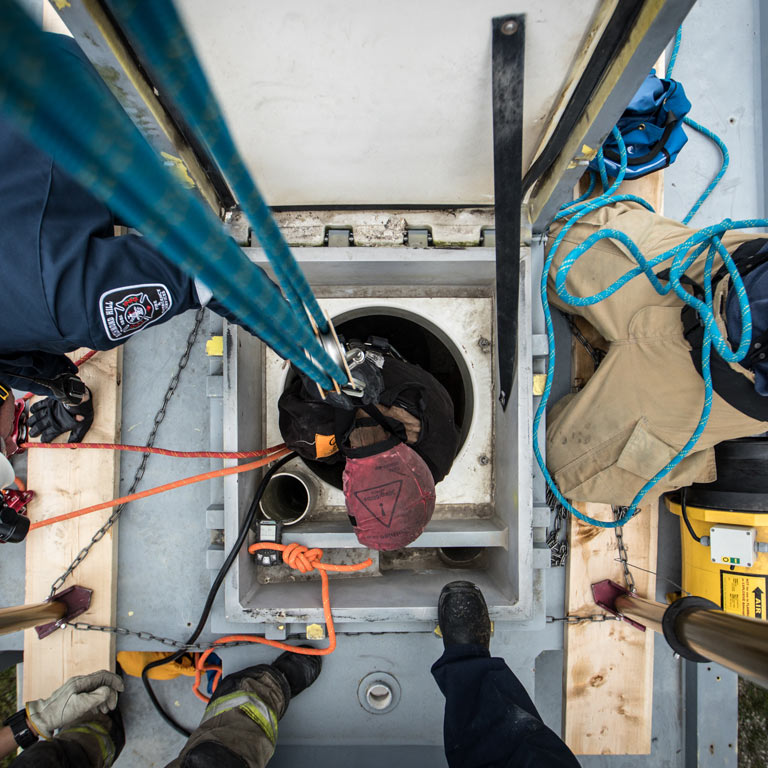
A confined space is defined as an area with no clear entrance or exit and is not designed for continuous use by people or animals. As confined spaces can involve vessels, tanks, sewers, pits, silos, tunnels, and ductwork, it is imperative that all rescue personnel possess the skills, knowledge, and equipment to ensure a successful outcome.

Hazards Associated with Confined Space Rescue Missions

  • Oxygen Deficiency or Enrichment: During a rescue from confined spaces, all parties involved are exposed to air quality with less than 19.5% oxygen. Low levels can lead to asphyxiation or suffocation. Danger is evident with high levels as well with an enriched oxygen atmosphere leading to fire or explosion hazard.
  • Toxic Gases and Vapours: Because of exposure to hazardous chemicals or substances, rescuers and victims can inhale carbon monoxide, methane, hydrogen sulfide, or other harmful gases.
  • Entrapment or Engulfment: Industrial buildings often see entrapment of rescuers and/or victims due to the materials handled such as water, sand, and grain.
  • Flowing Liquid or Free Flowing Solids: Confined spaces are at risk for being an open invitation for free flowing hazardous liquids that can cause the person trapped and the rescuer to experience burns, drowning, or suffocation.
  • Mechanical or Electrical Hazards: All commercial buildings have hazardous potential with live wires and dangerous equipment which can injure or cause a fire in or near a confined space.
  • Excessive Temperatures: Depending on the area of the building, the confined space can be exposed to extreme heat or severe low temperatures, putting victims and rescuers at higher risk of injury and death.

What Role Do Firefighters Play in Confined Space Rescue?

As with any form of an emergency situation, a firefighter works with their team to save victims from confined spaces while ensuring their own safety is not in jeopardy.

Within minutes upon arriving on the scene, firefighters assess the situation, create a safety perimeter, and plan a rescue with the appropriate equipment and skills. With each rescue, victims are assessed, provided emergency medical care, and transferred safely to emergency medical personnel.

How Can Firefighters Reduce or Prevent Confined Space Rescue Hazards?

  • Implementing Ventilation Measures: With a confined space, good ventilation provides the appropriate oxygen levels while removing all hazardous vapours and gases.
  • Using Appropriate Personal Protective Equipment (PPE): Gloves, respirators, and protective clothing are vital to all hazardous situations to keep personnel and the victims protected and safe.
  • Establishing Proper Emergency Response Protocols: A confined space rescue operation requires precise and proper emergency response planning to see a successful outcome.
  • Providing Proper Training: Having proper training in facing confined spaces and emergency situations can help reduce injuries.

Benefits of Advanced Confined Space Rescue Training

Firefighter training for confined spaces involves skills to reduce the risk of injury or death through enhanced safety measures. While all rescue operations need to be focused on the emergency, there are regulations and standards that need to be followed to keep everyone involved safe.

In addition, confined space training allows rescue personnel to have the knowledge and skills to perform in high-pressure situations regardless of the challenge. Specialized rescue methods can lead to the successful extraction of both the victim(s) and rescuers from within confined spaces. Every form of advanced training can support a firefighter in their goal to further their professional career.

How Does FESTI’s Confined Space Rescue Training Courses Help Firefighters?

The Fire and Emergency Services Training Institute (FESTI) is a private career college that offers training for firefighters, emergency personnel, as well as corporate and team building programs.

Basic Industrial Confined Space Rescue Training

In addition to basic firefighter courses, we offer the Basic Industrial Confined Space Rescue Training program. With the focus on confined spaces rescue response, participants will learn assessment and management of the situation before preparing for the actual rescue.

This training course involves confined rescue within industrial buildings and all that it entails in respect to area hazards and victim/rescuer conditions. The targeted area will then be reorganized to a safe environment.

Emergency Services Confined Space Rescue Training

The Emergency Services Confined Space Rescue Training offers step-by-step instruction on an emergency response in confined spaces situations. The program is designed with similar guidelines of the Basic Industrial Confined Space Rescue course.

Through classroom and hands-on training, learn how to respond to hazards, assist victims involved in a confined space situation, and obtain the necessary skills to manage all equipment and procedures for a successful outcome. Participants will learn to be part of the team with other responding personnel, understand the authority guidelines in emergency situations, and learn extensive rope rescue skills.

Confined Space Entry Certification

FESTI’s Confined Space Entry Certification program involves training of skill development for working within a confined space. Candidates will become familiarized with the Canada Labour Code, the Occupational Health and Safety Act, and on-hands learning of equipment. The program focuses on air monitoring, personal protective equipment, simulated scenarios, and live activities.

Why Choose FESTI?

For comprehensive confined space rescue training in Ontario, consider the live onsite training at the Fire and Emergency Services Training Institute (FESTI). Located at the Toronto Pearson International Airport, our experienced instructors provide intense firefighting training programs for candidates from across Canada and the world. Contact us to learn more about our training programs.

How to Become a Fire Investigator in Canada

How to Become a Fire Investigator in Canada

Estimated reading time: 5 minutes

In the career path to become a fire investigator, there are significant factors to consider in relation to the training, education, and skillset for such a career. If you have a unique yearning to understand the science behind fires and how they behave, fire investigation may be the right choice for you.

What Is a Fire Investigator?

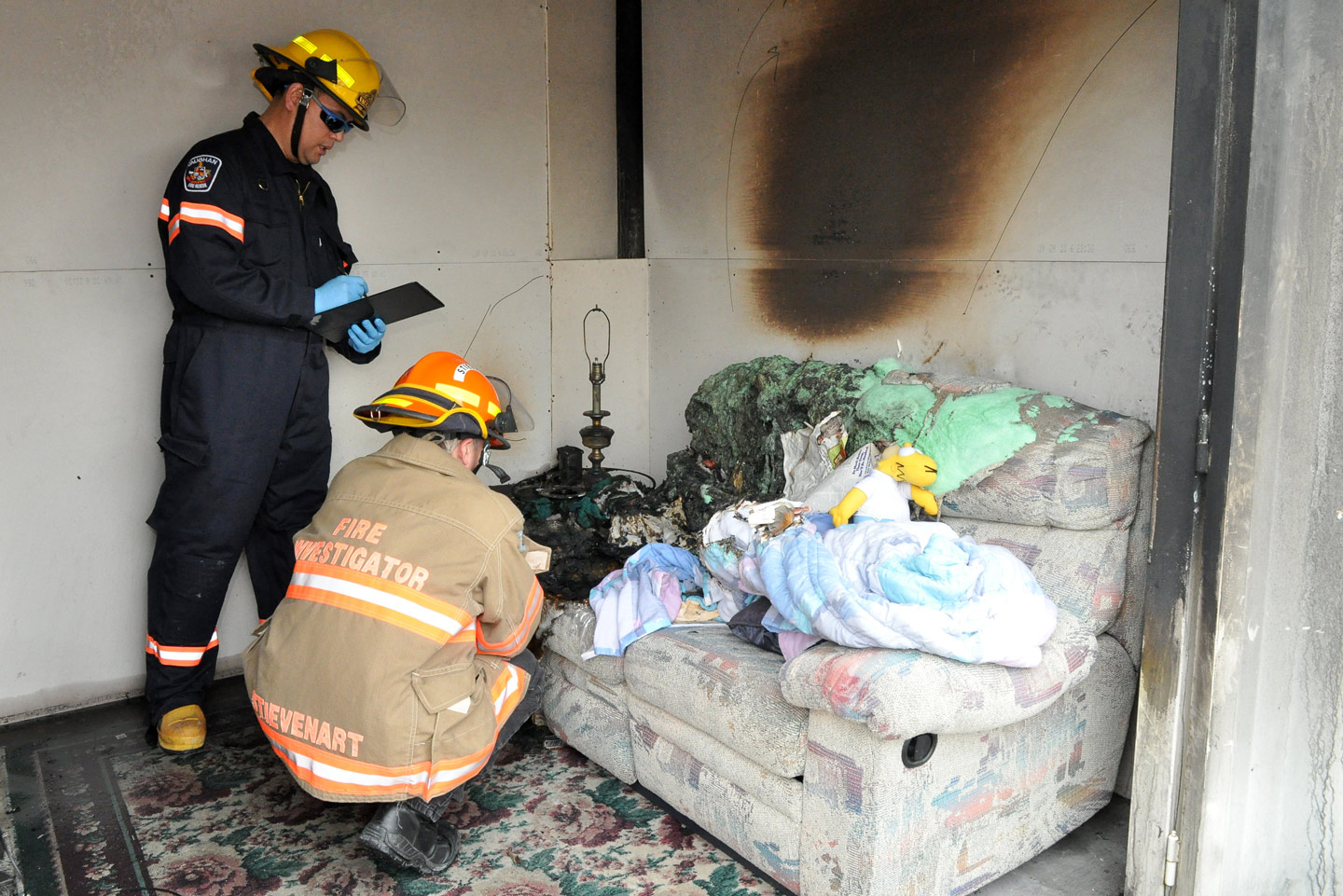
A fire investigator is defined as an examiner of the cause of a fire, especially with cases that present a suspicious source. This investigation involves inspecting the crime scene, taking samples, interviewing witnesses, collecting evidence, processing findings, and reporting findings.

Is There a Difference Between an Arson Investigator and a Fire Investigator?

While an arson investigator and a fire investigator share similar goals and evidence collecting processes, the two careers involve different roles. The fire investigator focuses on discovering the cause and origin while an arson investigator delves into finding out who was responsible for the fire. The two positions work closely together in cases where arson is suspected.

What Educational Background Is Required to Become a Fire Investigator?

Most fire investigators begin as a volunteer or full-time firefighter before gaining sufficient experience and training to become a fire investigator. To become a fire investigator, there are no required educational courses. That being said, most fire investigators have professional and educational background in various engineering training such as chemical, mechanical, electrical, or civil.

Steps to Become a Successful Fire Investigator

If becoming a fire investigator resonates with you, there are several steps that you can take to help prepare you for the career.

Complete Basic Education

Every firefighter role requires basic education such as a high school diploma or equivalency. Candidates with secondary education with a degree in engineering, criminal justice, fire science, chemistry, or other bachelor’s degree may find fire fighter training easier to comprehend.

Join a Fire Academy

Enrolling and completing courses at a reputable fire academy is another step towards becoming a fire investigator. The reason for taking these type of courses is to be able to better understand the science of fires and learn how to operate under the intense pressure and responsibility. Fire safety for self and others is the ultimate goal.

Most firefighter training programs offer emergency medical technician training and fire service vehicular operations. These courses assist firefighters in all roles, particularly as a fire investigator.

Join a Fire Department to Gain Experience

With certification, the next step is to put the education and training to use with a position with a fire department. The on-the-job experience cannot be matched with the addition of the knowledge obtained at a fire academy. First-hand experience of various roles and scenarios with a fire service can help a fire investigator have a better grasp of the actions of a fire.

Get Fire Investigator Certification Training

There are opportunities to obtain professional fire investigator training with accreditation by a reputable academy. The certification can vary among employers as certain roles require an additional two to four-year fire science program, depending on the extent of the role.

Regular fire investigator programs focus on fire research, analyzations, reporting procedures, fieldwork, and laboratory exposure. These involve fires of the electrical, chemical, forest, motor vehicle, and structure matters. Legal courses are also included in fire investigation training as the role involves working with police, lawyers, and other criminal law professionals.

Apply for a Job as a Fire Investigator

Once you have experience and training as a fire investigator, the next step is to explore job openings. This type of position can be found within fire departments and government agencies. All candidates undergo background and criminal checks, interviews, and potential testing in accordance with local laws. Fire investigator positions can be found in a variety of local, provincial, and federal government environments.

What Is the Average Salary of a Firefighter Investigator in Canada?

In Canada, a fire investigator is paid an average salary of $75,804. This number varies across the country and depends on the employer, location of the job, and experience of the candidate. Initially, a fire investigator’s salary can range around $56,100 with veteran positions offering up to $86,490.

How Can FESTI Help You Become a Fire Investigator?

To become a certified fire and explosion investigator, NFPI certification can be obtained through the program at the Fire Emergency Service Training Institute (FESTI). Located on the Toronto Pearson International Airport grounds, we focus on the training and courses associated with firefighter safety and knowledge.

NFPA 921 – Certified Fire and Explosion Investigator

The NFPA 921 Certified Fire and Explosion Investigator course is designed for firefighters, provincial fire investigators, forensic identification members, explosive disposal personnel, CIB detectives, and insurance adjustors.

Through theoretical studies and practical hands-on training, candidates will learn scene examination legalities, basic combustion principles, burn pattern analysis, physical evidence collection methods, fire causes, and motor vehicle fire and explosion investigations.

All Aspiring and Professional Firefighters in Canada Are Welcome

The Fire and Emergency Services Training Institute (FESTI) is a leading fire academy that offers a range of certified fire and emergency services training programs and courses. We are proud to offer live fire training facilities in a state-of-the-art modern environment.

Our private career college is designed with training facilities such as confined spaces, a burn building, a rescue tower, motor vehicle extrication area, and a hazardous materials training site. Our location also allows us to provide practical training for aircraft emergency mock-ups.  Contact us to learn more about our training programs.

Auto Extrication Training: The Lifesaving Skill Every First Responder Must Have

Auto Extrication Training: The Lifesaving Skill Every First Responder Must Have

Estimated reading time: 5 minutes

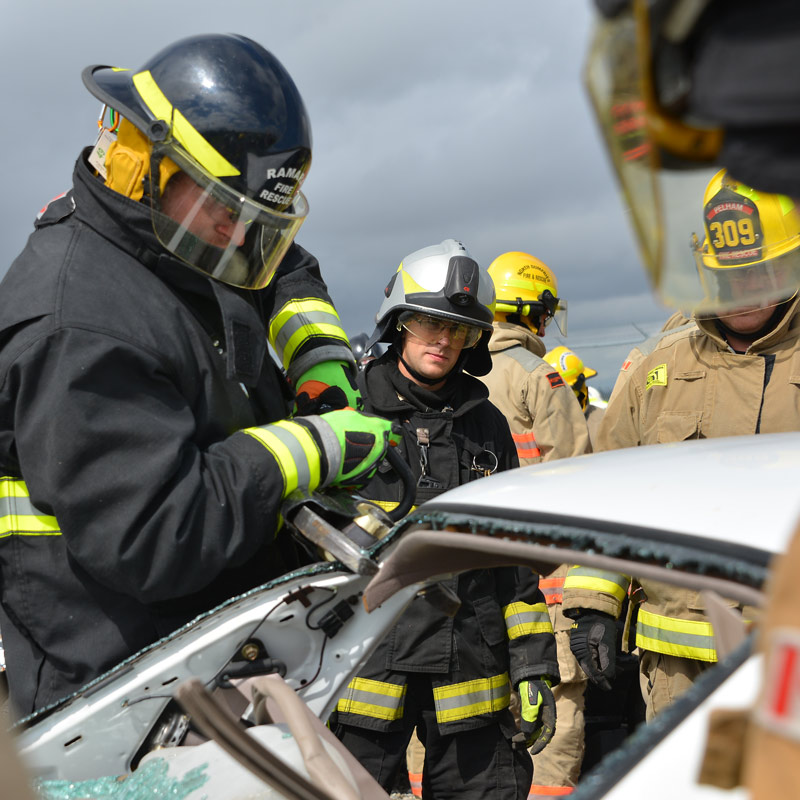
First responders training involves extensive auto extrication training. Auto extrication is the process of removing a vehicle, or its components, from around a person who is trapped within the vehicle due to a collision. This process is done with tools, equipment, and precise skills to minimize any further injuries to the occupants.

Key Steps in Auto Extrication Rescue Missions

Vehicle extrication involves several key elements that require accurate observance for a successful outcome. 

  • Access the scene
  • Wear appropriate PPE
  • Create a safe working environment
  • Prepare necessary tools
  • Stabilize the vehicle
  • Disable the vehicle power
  • Be mindful of undeployed airbags
  • Start first aid if needed
  • Devise extrication plan
  • Protect patient from extrication hazards
  • Practice safety

Common Auto Extrication Rescue Mission Challenges

With a motor vehicle extrication, there are common challenges that need to be met to ensure the scene is secure and the victim is safely removed from the vehicle.

  • Access: The location of the vehicle may pose a challenge if it is on a steep embankment, an alleyway, on the side of a busy highway, or in a waterway. Safety of the responders and equipment is paramount before any rescue begins.
  • Vehicle Stability: Unless the vehicle is sitting upright, the positioning of the vehicle may pose hazardous scenarios. There are a variety of heavy equipment tools that can be used by firefighters to stabilize the vehicle to prevent it from moving during the extrication.
  • Entanglement: The safety features of the vehicle may cause the person(s) in the vehicle to become entangled and hinder quick rescue. Airbags and seat belts are designed to protect the occupant during a motor vehicle accident or collision and as a protection after the vehicle comes to a full stop. This is when the basic methods of manipulative extrication, disassembly, cutting, and forcing are used.
  • Hazardous Materials: The vehicle(s) involved in a collision or accident may contain hazardous materials. These can involve gasoline, diesel, battery acid, natural gas, hydrogen gas, and/or a combination of these. Exposure to hazardous materials can increase the risk to the vehicle occupants and first responders.
  • Time Pressure: In dealing with auto extrications, time is often of the essence. Collisions and accidents that require the use of extrication tools also require quick work by responders, often in risky environments.
  • Collaborating with Other Responders: At the scene of a motor vehicle accident, there are a number of first responders, such as fire, police, EMTs, and other emergency personnel. Everyone has a specific role to play in auto extrication.
  • Weather Conditions: A huge challenge with most extrication rescues is the current weather. Rain, snow, ice, and wind can have an impact on the ability of the first responders to perform auto extrication. Severe weather can hamper efforts and slow down the process.

Why Auto Extrication Training Is Essential for First Responders

An auto extrication rescue may be needed at any time in any locality, whether it’s a rural or an urban centre. Every first responder requires proper training to perform such a job. Learning and understanding the required equipment used is vital before any first responder can be expected to be involved in an auto extrication.

In addition to the fire service tools, firefighters need to be familiar and comfortable with the ever-changing technology of vehicles. With the knowledge of auto extrication rescues and the vehicle technology, a first responder has the capability to perform the essential duties of the job.

How Firefighters or First Responders Can Improve Vehicle Extrication Training

Firefighter training for vehicle rescue scenarios needs to be a critical part of every department’s budget. On-going training for veteran first responders is just as important as it is for new recruits.

  • Regular Training: Regular auto extrication training must involve updated material for all equipment and possibly rescue scenarios.
  • Hands-on Practice: Once the academic skills are obtained, it is time to put the learning to use with hands-on practice.
  • Multi-Agency Exercises: As first responders do not work alone, practical training involving a variety of emergency responders, paramedics, police officers, and other fire departments need to be combined.
  • Training on the Latest Technologies: From communication to extrication tools, all firefighters are required to be fluent in the managing and use of the latest technology.
  • Evaluating Training: Training is basically practice routines which should be evaluated from beginning to end to find needed improvement areas.
  • Continuous Learning: Whether a firefighter has been on the job for five months or 30 years, ongoing training and continuous learning is part of the position.

How Can FESTI Help First Responders with Auto Extrication Training?

The Fire and Emergency Services Training Institute (FESTI) offers a world-class NFPA Auto Extrication Course, which requires NFPA 1001 Level 1 & 2 certification. This practical and hands-on course is provided by qualified instructors on the FESTI grounds at Toronto Pearson International Airport.

Our course involves scene safety, outer/inner circle check, stabilization/cribbing, glass management, purchase points or insertion points, door removal, side removal, third door conversion, roof removal, roof flap, dash displacement, and golden hour & ten life cycles of auto extrication.

Learn Auto Extrication from the Experts at FESTI – Register Today!

The Fire and Emergency Services Training Institute (FESTI) offers training programs for certification at our private career college. In addition to being a firefighter academy, we also offer corporate training and team building programs for all first responders.

Let us help you rise further with our NFPA Vehicle Extrication Training course. Register for a course or program by clicking here and completing the webpage registration. Or for more information about FESTI, contact us today.